
How to Move Forward Despite Fear
I wanted to name this article "How to Overcome Fear," but I realized that most of us will almost never overcome fear. All we need to learn is how to move on despite it. Here, I shared how I do that.

I’ve been away for almost 9 months, and I want to thank you for sticking with me so far. I’ve been navigating a personal loss. It’s been a difficult time, and I needed space to grieve and heal. I’m slowly finding my way back, and I look forward to reconnecting with you again.
Last year, 2024, started with mixed feelings. I was excited about the future because there were some things I wanted to do. But at the same time, I was grappling with a decision: Should I leave my job?
The pay was great, but I was unhappy. Most times, before I joined a call, I did breathing exercises to calm my nerves and get my racing heart under control. Eventually, I let it go without another offer lined up and with an almost non-existent nest egg.
I’ve made risky career moves before. But this was the riskiest. I was afraid of running out of money, of being unable to make my rent, of being unable to meet my financial obligations. If a family member has a medical emergency, how am I going to be able to pay for that? (interestingly, this happened to me. However, it happened a month after I got back on my feet. So crisis averted 🙂)
This whole experience taught me an interesting lesson about fear. And that’s what I’d like to share in this newsletter.
Fear keeps us trapped and makes it impossible to think beyond the present. It makes it hard to remember that the future is always brighter. And by failing to realise this, we remain in situations that don’t serve us and never get to experience the joy that’s on the other side.
The first time I actively started thinking about fear was after a discussion with my sister. We talked about leaving my job without an offer, plus other decisions I made during that period. She said, “You are so brave. I wish I could be like you”.
I told her I wasn’t brave. More than a year later, I still stand by that. I am not that brave. But here’s what helped me make bold decisions even when I am afraid: Have some philosophy about your life, career and endeavours.
You’d be surprised to find that many people float through life without some kind of philosophy that guides what they do. When you don’t have this belief system that guides your actions and influences your decisions, you’re kind of “moorless”-unanchored, adrift. Anything goes.
The thing is, your belief system doesn’t have to be fancy or complicated. It’s simply a principle that guides how you act or what you believe. In my career and life, my philosophy is to never endure unhappy situations that don’t serve me and steal my joy.
It’s to NEVER ever believe that I don’t have options. Never. Each time I stepped out and acted in line with this belief, it always worked out in the end. Sure, there’s that period of difficulty and hardship (I’ll write about it in a subsequent section). But if I stay the course, it always works out.
Beyond this overarching philosophy about my life, I create some kind of compass for other situations. For instance, when I start a new role, I ask myself what I want to get out of that role. By clarifying this from the outset, it is easier to measure my progress and helps me make decisions that support my career goals, no matter how difficult.
On the personal side, I suddenly had to raise my brother after my mum passed. As a childfree woman, I am clueless about this. But I developed an ethos around raising a child. The last few months have been messy and difficult, and I’ve gotten it wrong so many times. But having this principle in place makes it easy for me to retrace my steps and try to do better.
What Happens When You Step Out in Fear?
A few years ago, I made a decision that everyone saw as risky. However, I felt strongly about it and went ahead. But before I leapt, I told myself that no matter what happens, I’d never allow myself to regret my decision. This is my rule about decisions: never look back. Don’t cry over split milk.
I think one of the mistakes we make when we make decisions is that we think immediately, the stars will align in our favour. That the universe will instantly reward you for being brave (without first putting you through the wringer).
It’s most likely never going to be the case. For instance, when you leave a job without another offer, recruiters will not flood your LinkedIn DM with offers. It will most likely be radio silence followed by a deluge of rejection emails.
It’s going to be days and nights spent refining and editing your resume, updating your cover letter and portfolio, asking strangers on Reddit to review your resume, and asking people you’ve never met on communities if they’d interview you. It is trying to nail the STAR interview method and rehearsing times without a number in front of the mirror.
This is the valley. And this valley is filled with so much uncertainty that it’s always easier to stay in the unhappy familiar situation than to venture into the unknown.
Graham Weaver calls it the valley of discomfort, which he illustrated with the diagram below
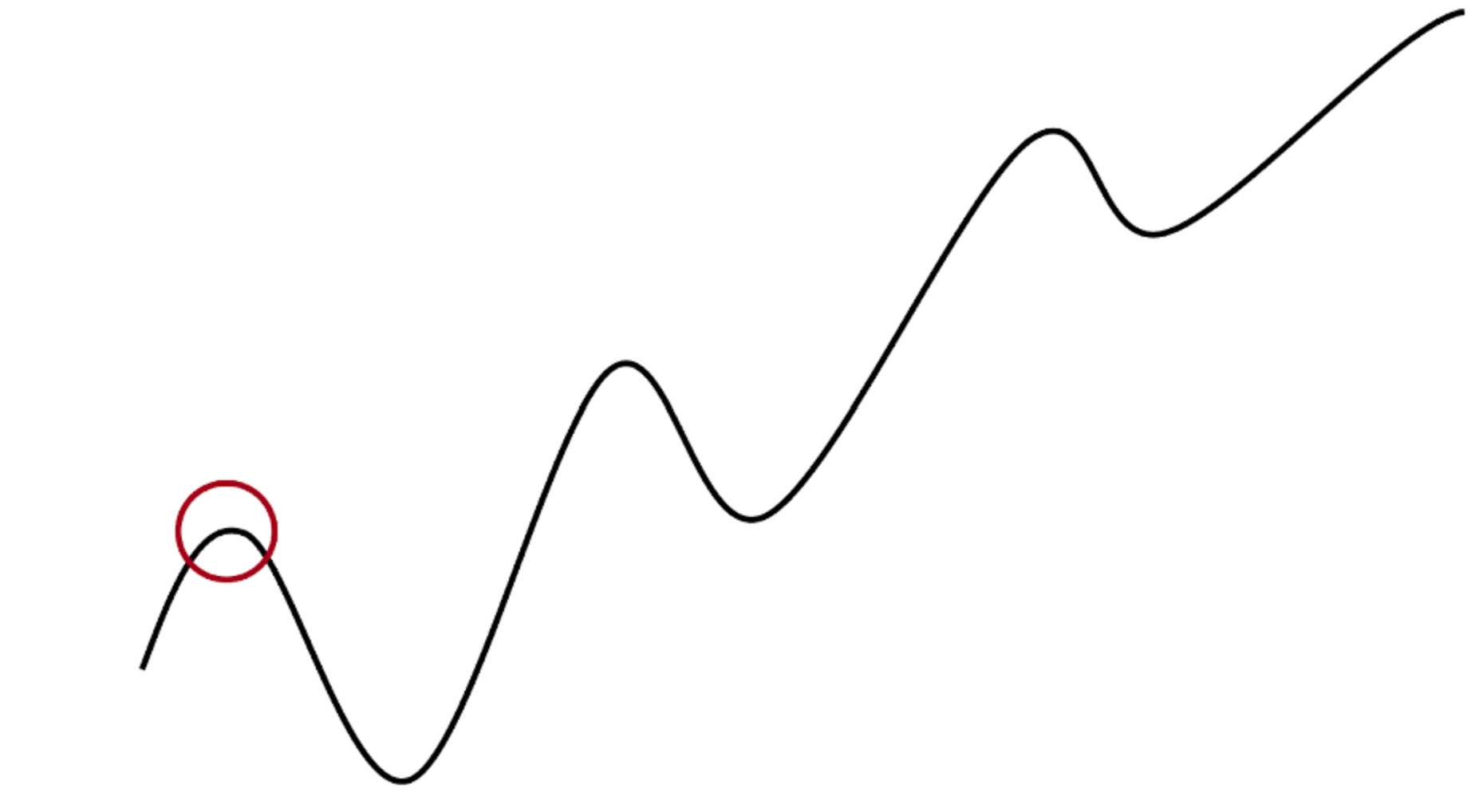
He said your life is going to get worse first before it gets better. So you have to ask yourself if you’re willing to endure this worse so you can eventually get the better.
“ The graph above depicts growth and change in our lives. We typically hit a plateau at some point, shown by the red circle. Once we reach a plateau, things are going to have to get worse before they get better. This is true for nearly all growth and improvement. For example, if you need to have a difficult conversation with your partner, your life will get worse first. But once you have the discussion, you will work through the issue and become closer. If you need to leave a difficult relationship, you might have a painful breakup, be lonely for a while, and then experience the anxiety or nervousness of dating again. Your life will get worse before it gets better. This is true for changing jobs, starting a new career path, learning a new skill, or starting a new habit.”
Graham Weaver, How to Live an Asymmetric Life
For me, the valley lasted for about four months. There were days I was upbeat, and there were days I felt the weight of my decision. But one thing I never did was to regret. I had promised myself that I’d never do that. I knew that my decision aligned with my values. I just had to suffer a little while. Though I believed it would work out, I didn’t know how or when. And that uncertainty occasionally made me freak out.
The irony is, some of the best things in your life can come from this season. I built resilience and developed a clearer sense of my values and non-negotiables. Most importantly, I now carry the confidence that I can survive the worst-case scenario, which, paradoxically, makes me more willing to take calculated risks others might avoid.
This is the paradox of the valley. What feels like hardship in the moment becomes your greatest asset on the other side. The discomfort doesn't just precede growth; it creates it. And while I can't promise that your valley won't be deep or long, I can assure you that if you keep moving forward, the landscape eventually changes, and you emerge not just back where you started, but fundamentally transformed.
How to Get Unstuck and Move on Afraid
At the beginning of the article, I wrote that we’d most likely never be able to conquer fear. Instead, the goal should be to move on despite the fear. This is important because fear immobilizes you.
One method I use is what I call “getting the fear out of my head onto paper”. A lot of the time, you are ruminating on your fears and going round in circles. That isn't helpful because you are not addressing the fear head-on. You need to sift through it and address it.
Sifting through this fear and coming up with mitigation strategies gives you a shot of boldness that you need to take the first step. To clarify, writing about not letting fear hold you back is not the same as making brash decisions. In fact, this process of writing down your fears and how to address them is a way to apply logic to fear. This logic weakens the fear, even if it never goes away completely. You just need to take it down a notch.
When I needed to make a decision some time ago, I drew this flowchart . It was my way of getting the fear out of my head onto paper when I was at a career crossroads some time ago. I followed it up with this template. The goal is to write exhaustively. Clarify the fear and come up with how you’d manage what’s making you afraid.
The result? I didn’t eliminate the fear completely. I don’t think that’s the point. But I understood it. I named it. And because I could see it clearly, I wasn’t stuck anymore. I was still afraid, but I was moving.
So if you’re sitting on a decision and fear is holding you back, try this. Get it out of your head and onto paper. Write it down. List the worst-case scenarios. Think through how you’d respond. The courage you need is on the other side of clarity.
Conclusion
Moving forward despite fear isn't about eliminating fear. It's about changing your relationship with it. It's about recognising that fear will always be present when you're growing, changing, and pursuing what matters to you.
I still get afraid. I feel uneasy, even hesitant when I think about the next big step in my career or life. But now I know that this feeling isn't my enemy. It's a sign that I'm pushing my boundaries and trying to get better.
The question isn't whether you can become fearless. The question is: can you build a life where fear no longer makes decisions for you?
If there's one thing I want you to take away from this article, it's this: The path to what you want is rarely a straight line. It involves valleys, plateaus, and sometimes steep inclines. But staying where you are because you're afraid is perhaps the biggest risk of all, the risk of never discovering what could have been.
So take that first small step. Get your fears out of your head and onto paper. Find your philosophy. And remember that it's okay to move forward, afraid. In fact, it’s the bravest thing you might ever do.
How to use the templates:
For the Google Doc, simply click on “File” and then “Make a copy”.
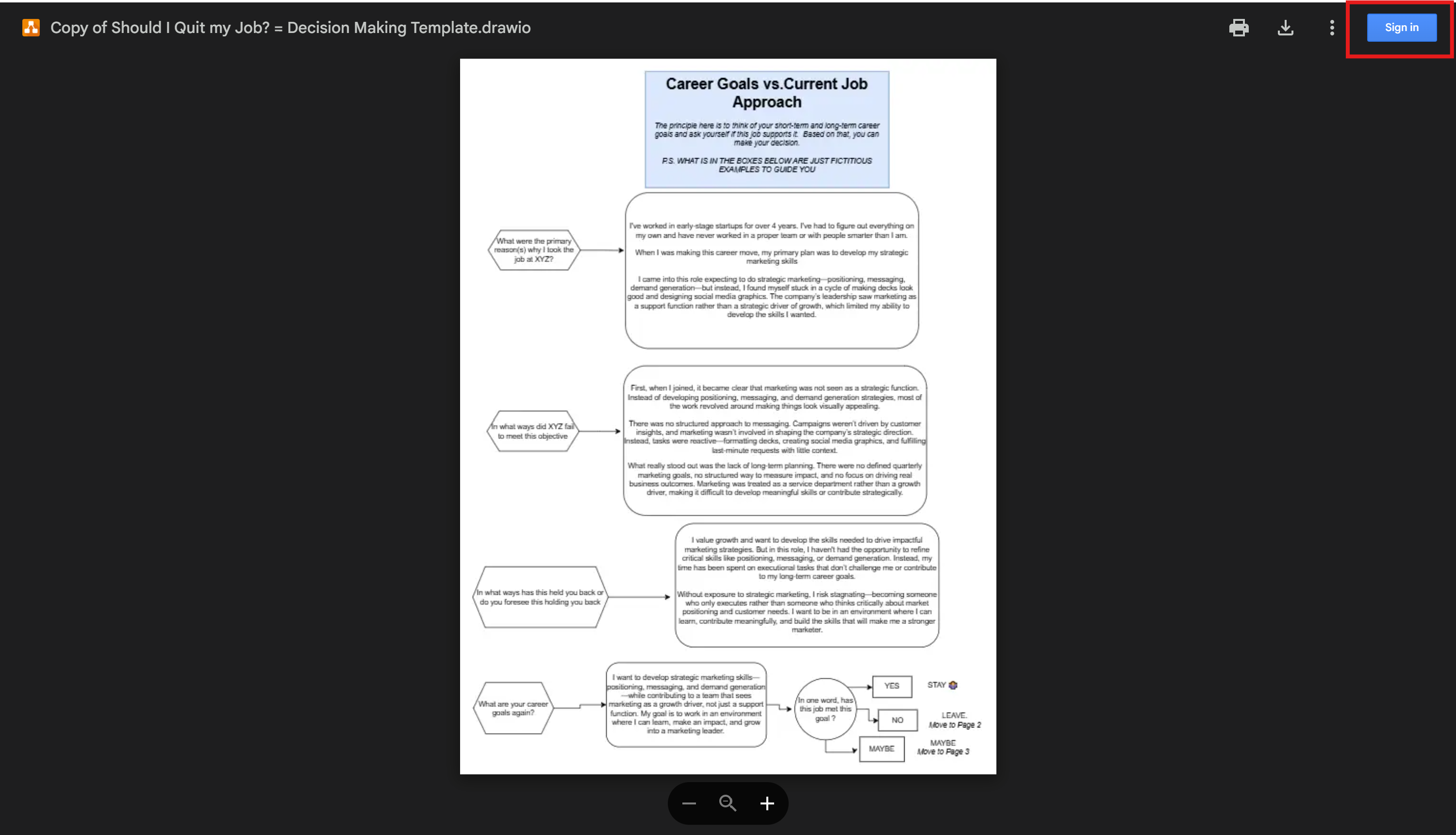
For the flowchart, If you're not signed in to your Google account, you’d see the sign-in button on the top right-hand side. Sign in
After signing in, in the middle, you’d see a button, “open with draw.io.”
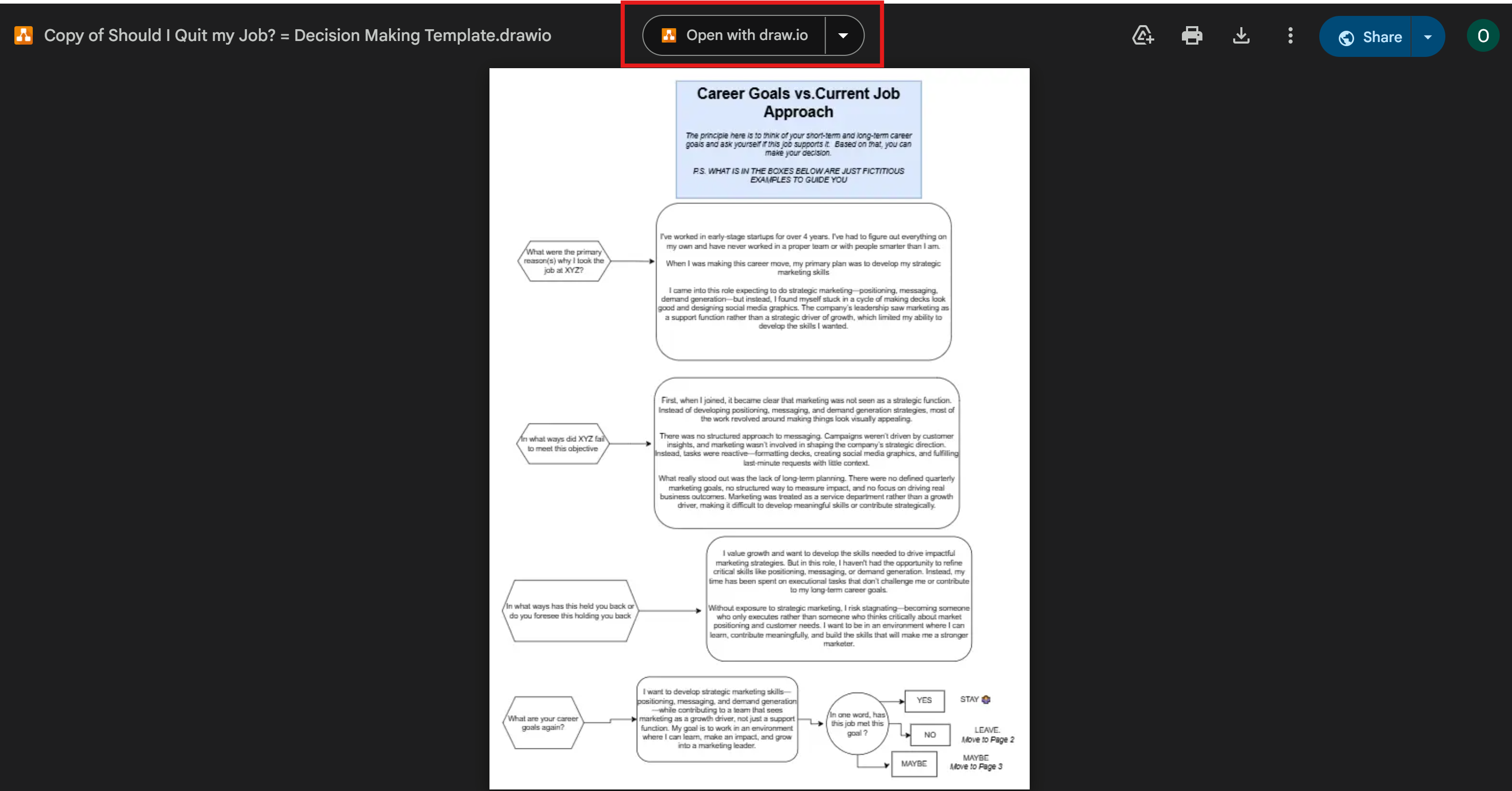
Authorize, sign in with your Google Drive and access the form. It’s read only. To make your copy, click on File, make a copy, and there you go.
Love this, Onyi. So timely and important. I’ve been navigating my own valley, but my experience with making difficult decisions has made it easier to tackle as well. Definitely takes practice. I’ll be using these templates, thanks!